
The independent heating and cooling company across Kentucky and the Ohio Valley
Puddles by the Furnace
You walked down to the basement and there is a puddle by the furnace. Maybe it is a damp ring on the concrete, maybe it is spreading toward a floor drain. Either way, water and a heating system are not supposed to share space. We fix this across Illinois, Indiana, Kentucky, Ohio, Tennessee and West Virginia. Shut the system off at the thermostat and call us.
Call (888) 414-3292- A real person answers
- Open 7 days
- Written quote before work starts
Taking calls until 5:00 PM ET
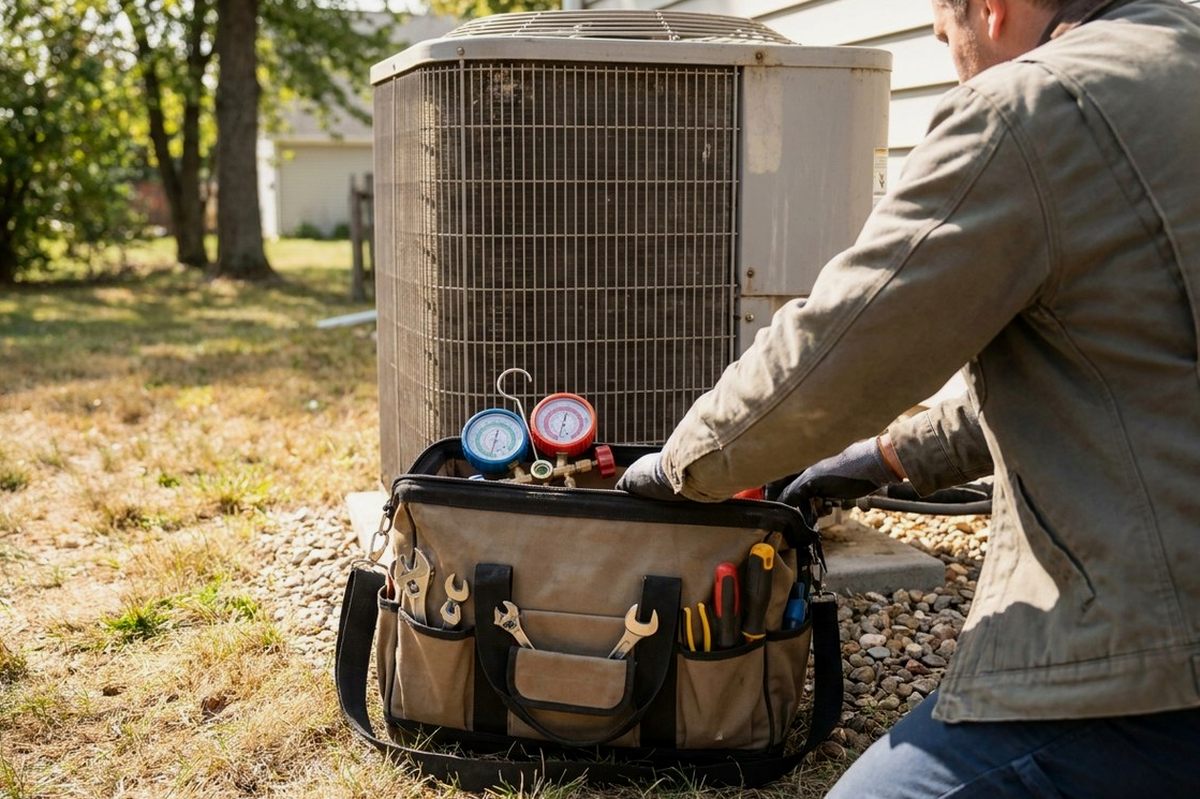
Derby City Comfort service team · field-reviewed before publishing
What a Puddle by the Furnace Actually Tells You
Water on the floor means something that should be draining is not. High efficiency furnaces make condensate on purpose. They pull so much heat out of the exhaust that moisture forms inside the heat exchanger and has to run out through a drain line. If that path clogs, backs up or comes loose, the water finds the floor instead. Older furnaces without condensate drains usually are not the source at all. In that case the water is coming from the AC coil sitting on top of the furnace, a humidifier line, or plumbing overhead. Knowing which one changes the whole repair, so we start by tracing where the water is wet and where it is dry.
Cause One: A Clogged or Disconnected Condensate Drain
This is the cheapest and most common answer. Condensate carries dust, and over a season or two that turns into sludge inside a thin plastic line. Add a little algae growth in a humid basement and the line closes up. Water then backs into the collector box, fills the trap and spills. Sometimes the fix is simpler still. A drain line gets bumped by a storage bin, pops off its fitting and runs straight onto the slab. We clear the line, flush the trap, check the slope so water actually runs downhill, and secure the connections. If there is a condensate pump, we test whether it is actually pumping or just humming.
Cause Two: The AC Coil Above the Furnace
In most homes across the region, the indoor cooling coil sits directly on top of the furnace in the same cabinet. In cooling season that coil sheds a lot of water into a drain pan. A plugged pan drain, a rusted through pan, or a coil so dirty that water sheets off the fins instead of draining will drop water right onto the furnace below. That is how you get a summer puddle from a heating unit that has not run in months. This one matters because the water lands on the control board and the burner assembly. We clean the coil, clear the pan, and look for rust holes and damaged insulation that let water escape sideways.
Cause Three: Flue, Humidifier and Plumbing Problems
A furnace with a metal flue can sweat inside when exhaust cools too fast, usually from an oversized or poorly pitched vent pipe. That condensation runs back down into the cabinet. Whole home humidifiers are another regular offender. They have their own water feed and drain, and a stuck fill valve or a plugged drain will run water for hours. Then there is the plumbing that has nothing to do with heating. Water heaters, washtub lines and foundation seepage all leave puddles near the same corner of a basement. If the floor is wet along a wall and only damp at the furnace, we look up and out before we look inside.
What You Can Safely Check, and What We Do Differently
Turn the system off at the thermostat so it stops making more water. Mop up what is there and see how fast it comes back. Check the filter, since a dirty one starves the coil and causes freezing that later melts. Look for an obviously disconnected plastic drain line and see whether vents are open. That is where homeowner checks stop. Do not open the burner compartment, touch wiring or take a shop vacuum to standing water near electrical parts. If you smell gas at any point, leave the building, call 911 or the gas utility from outside, then call us. On our side we pressure clear drains, inspect the heat exchanger, test the condensate pump and safety switch, and check the flue for proper pitch and draft.
Puddles by the Furnace — what people ask
Can I keep running the furnace with water on the floor?
We would not. Water reaches control boards, wiring and the inducer motor, and a soaked component can fail mid freeze. Turn the system off at the thermostat, dry the floor and call us to trace the source before the next cold night.
Why is water leaking in summer when the heat is off?
Almost always the cooling coil sitting in the same cabinet. It sheds condensate all summer, and a plugged drain pan or rusted pan dumps that water down onto the furnace below. The furnace is the victim, not the cause.
Is a little water near the drain normal?
A damp spot right at a floor drain during heavy cooling or heating can be normal splash. A spreading puddle, standing water or a wet furnace base is not. If it returns after you dry it, have it looked at.
How it works
- Step 1
Tell us the symptom
Call or fill in the quote form. We ask what changed, when it started, and what the thermostat reads. That short conversation tells us whether you need a visit today or tomorrow morning.
- Step 2
We diagnose on site
A technician checks the thermostat, the electrical side, airflow through the filter and ducts, and the equipment itself. We find the actual cause instead of swapping parts and hoping the noise goes away.
- Step 3
You decide before we work
We explain what failed, what the repair involves, and what we would do if it were our own house. Nothing gets replaced until you say go. Then we test the system before leaving.
- A real person answers
- Open 7 days
- Written quote before work starts
Why homeowners call us
- Old houses and new onesWe are used to century-old homes with retrofitted ductwork and 1970s subdivisions with original returns. Tight crawl spaces, low basement headroom and odd attic runs are normal parts of the day for us, not surprises that stall the job.
- Built for the swingsHumid summers push AC systems hard and January freezes expose weak igniters and cracked flues. We repair for both extremes across the region, so the fix holds when the weather turns instead of failing the first hard week.
- Air conditioning and heating bothAir conditioner repair in July, heating repair in January, and the IAQ and airflow problems that hide in between. One crew that knows how your cooling and heating share the same blower and the same duct system.
- Plain talk, no pressureWe tell you when a repair makes sense and when replacement is the honest answer. No scare tactics about your BTU load, no upsell scripts. You get the condition of the system and a clear next step.
- All major brands, gas & electricEvery major HVAC brand, gas and electric, handled by an independent crew.
- Straight answersIf a system is not worth repairing, we say so, often right on the phone.
About this guide
Checked everything on the list and it still acts up?
Mention which checks you ran when you book; it speeds up the visit.
- A real person answers
- Open 7 days
- Written quotes
- All major brands
- Gas & electric
Rather not call? Get a free quote →