
The independent heating and cooling company across Kentucky and the Ohio Valley
Ignitor & Flame Sensor Repair
We repair and replace furnace ignitors and flame sensors for homeowners across Illinois, Indiana, Kentucky, Ohio, Tennessee and West Virginia. If your furnace clicks, tries to light, runs for a few seconds and then shuts off again, a cracked hot surface ignitor or a dirty flame sensor is one of the most common causes. It is a small part doing a critical job, and it is a same-visit fix in most cases. Call us and describe what you hear and how long the burners stay lit. That detail helps us arrive with the right part.
Call (888) 414-3292- A real person answers
- Open 7 days
- Written quote before work starts
Taking calls until 5:00 PM ET
What the job actually involves
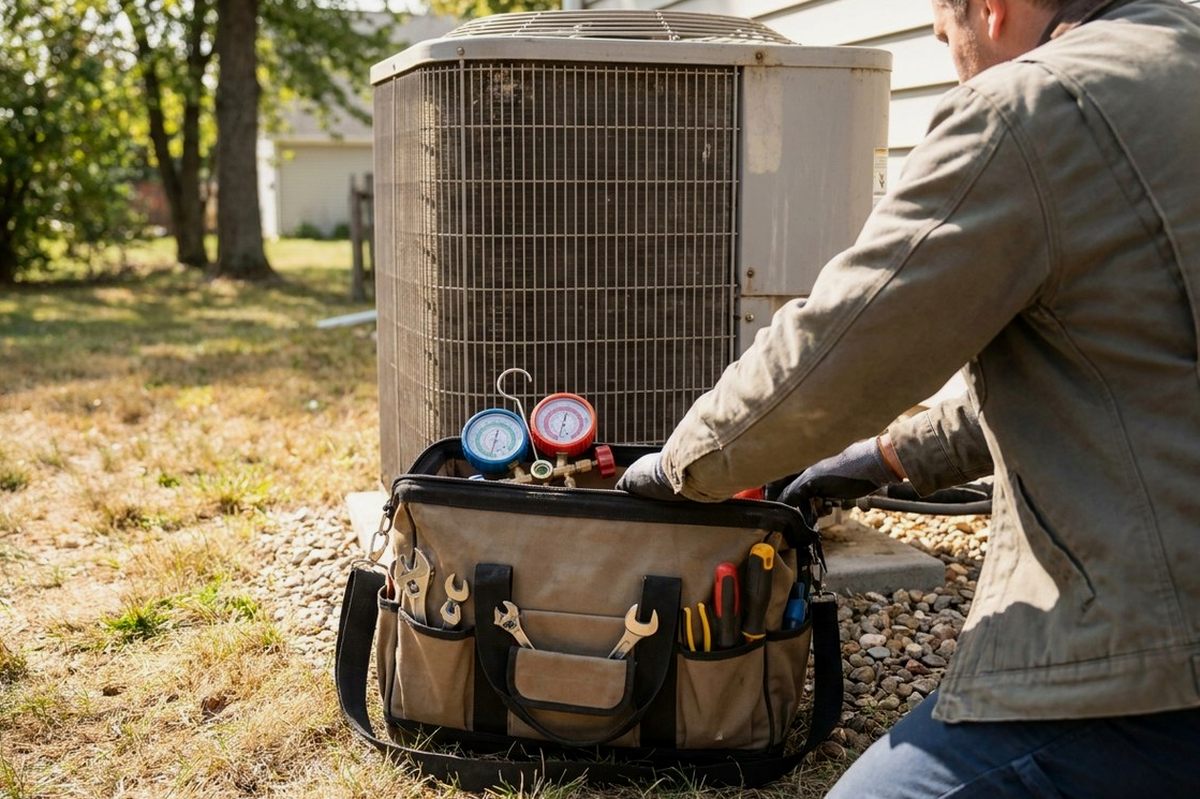
A hot surface ignitor glows to light the burners. The flame sensor then confirms a flame exists, and if it does not confirm within a few seconds, the control board shuts the gas off on purpose. That is a safety feature working, not a defect. Our technician pulls the burner compartment cover, tests the ignitor for continuity, checks the sensor's microamp signal against what the board expects, and cleans or replaces what is out of range. Most visits run under an hour on a basement furnace with decent access.my furnace light and then quit? Usually the sensor.
What we check and what we install
We start at the sequence: call for heat, inducer, pressure switch, ignitor glow, gas valve, flame proof. Watching that order tells us whether the ignitor is weak, the sensor is coated, or something upstream is the real problem. We check the sensor's signal, the ground path, burner condition and the flue draft. If a part is failing we install a matching ignitor or sensor, then run the furnace through several full cycles to confirm it proves flame every time before we leave.
How we decide this is the right call
A cracked ignitor and a fouled flame sensor look similar from the thermostat, so we measure rather than guess. If the ignitor never glows, we test it and its wiring. If burners light and drop out after four or five seconds, the sensor or its ground is the suspect. If the signal is fine and the furnace still short cycles, we keep looking at the pressure switch, limit or a plugged filter. We tell you which it is and why before any part goes in.
Other furnace repair work
What every visit includes
You approve a written quote first
Covering 171 cities across Illinois, Indiana, Kentucky and 3 more.A real person answers
Open 7 days, 8:00 AM to 5:00 PM ET.Independent of every manufacturer
Carrier, Trane, Lennox, Goodman and more. We are not an authorized dealer for any of them.Ignitor & Flame Sensor Repair — quick answers
Can I clean the flame sensor myself?
We do not recommend it. The sensor sits inside the burner compartment beside a live gas valve and high voltage wiring. Safe checks at home are the filter, thermostat batteries, the breaker and open vents. Leave the rest to us.
How long does an ignitor last?
Hot surface ignitors are a wear part. They glow to over 2,000 degrees every cycle and eventually crack, often after several heating seasons. Cold snaps that force long run times tend to be when they finally give out.
My furnace lights then shuts off after a few seconds. Is that dangerous?
That lockout is the furnace protecting you, so it is not an emergency by itself. If you ever smell gas, leave the building first, call 911 or your gas utility from outside, then call us.
How it works
- Step 1
Tell us the symptom
Call or fill in the quote form. We ask what changed, when it started, and what the thermostat reads. That short conversation tells us whether you need a visit today or tomorrow morning.
- Step 2
We diagnose on site
A technician checks the thermostat, the electrical side, airflow through the filter and ducts, and the equipment itself. We find the actual cause instead of swapping parts and hoping the noise goes away.
- Step 3
You decide before we work
We explain what failed, what the repair involves, and what we would do if it were our own house. Nothing gets replaced until you say go. Then we test the system before leaving.
- A real person answers
- Open 7 days
- Written quote before work starts
Why homeowners call us
- Old houses and new onesWe are used to century-old homes with retrofitted ductwork and 1970s subdivisions with original returns. Tight crawl spaces, low basement headroom and odd attic runs are normal parts of the day for us, not surprises that stall the job.
- Built for the swingsHumid summers push AC systems hard and January freezes expose weak igniters and cracked flues. We repair for both extremes across the region, so the fix holds when the weather turns instead of failing the first hard week.
- Air conditioning and heating bothAir conditioner repair in July, heating repair in January, and the IAQ and airflow problems that hide in between. One crew that knows how your cooling and heating share the same blower and the same duct system.
- Plain talk, no pressureWe tell you when a repair makes sense and when replacement is the honest answer. No scare tactics about your BTU load, no upsell scripts. You get the condition of the system and a clear next step.
- All major brands, gas & electricEvery major HVAC brand, gas and electric, handled by an independent crew.
- Straight answersIf a system is not worth repairing, we say so, often right on the phone.
Ignitor & Flame Sensor Repair
Ready to book ignitor & flame sensor repair?
Describe the system and your ZIP. The written quote comes before any work.
- A real person answers
- Open 7 days
- Written quotes
- All major brands
- Gas & electric
Rather not call? Get a free quote →