
The independent heating and cooling company across Kentucky and the Ohio Valley
Keeping the Condensate Drain Clear
Your AC does more than cool the air. It pulls water out of it, gallons on a humid day, and that water has to go somewhere. It leaves through a narrow drain line. When that line clogs, the water backs up and finds your ceiling, your floor, or your furnace cabinet. We fix condensate problems across the region, and most of them started small.
Call (888) 414-3292- A real person answers
- Open 7 days
- Written quote before work starts
Taking calls until 5:00 PM ET
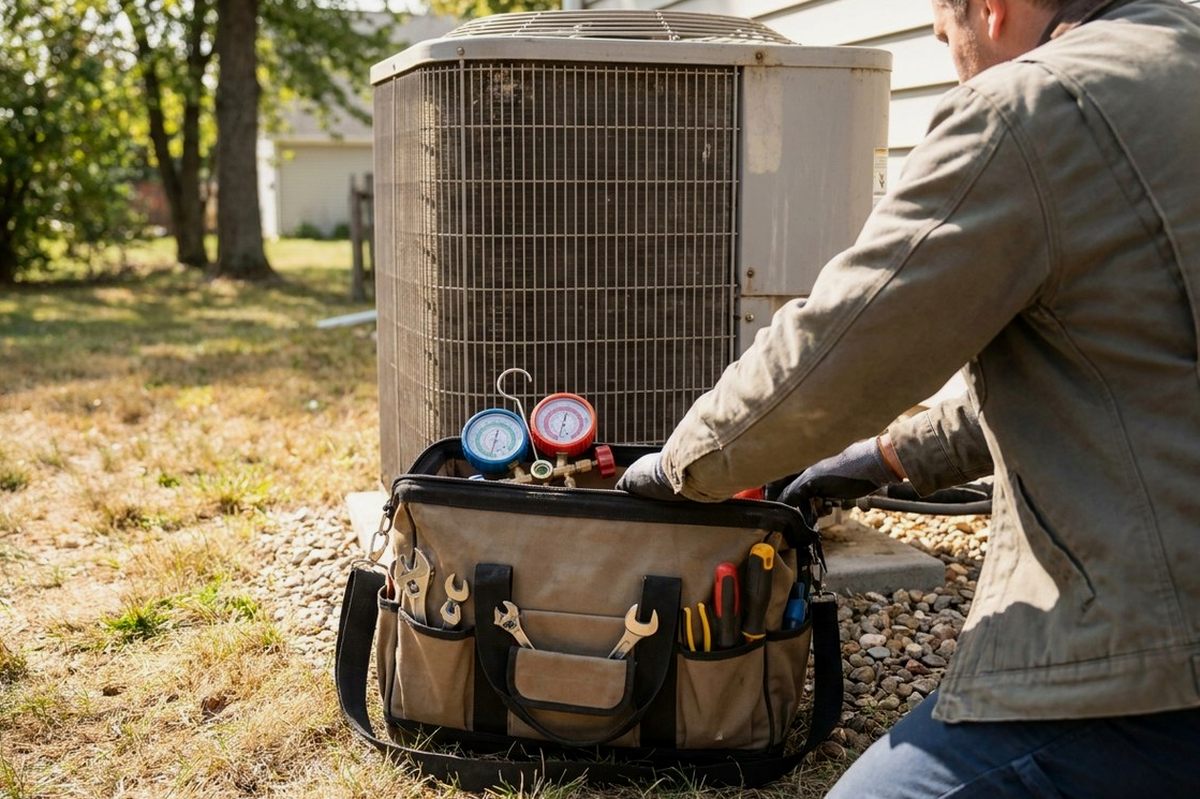
Derby City Comfort service team · field-reviewed before publishing
What Slow Neglect Actually Looks Like
A condensate line clogs from the inside out. Dust that slips past the filter lands on the wet coil, washes into the drain pan, and mixes with the algae that likes standing water. Over a season or two that sludge narrows the pipe. Then it plugs it. Water climbs back into the pan, spills over the edge, and runs down whatever is under the air handler. In a basement that is a rusted furnace cabinet and a stained floor. In an attic setup it is a ceiling stain that spreads every time the AC runs. Some systems have a safety switch that shuts cooling off before the flood. Many older ones do not.
The Habit That Prevents Almost All Of It
Change your filter on schedule and keep the area around your indoor unit clear. That is the homeowner half of the job, and it removes most of the dust that becomes sludge. The other half is having the drain line and pan cleared during a maintenance visit, before cooling season, while it is still just a slow drain instead of a leak. If your system has a condensate pump, we check that it runs and that its float is free. If it drains by gravity, we confirm the slope is still right and nothing has sagged or been bumped.
How Often, Realistically
Filters get looked at monthly and changed when they are grey, which for most homes across Kentucky, Indiana, Ohio, Tennessee, Illinois and West Virginia works out to every one to three months. Pets and a busy household push that shorter. The drain line itself should be cleared once a year, in spring, before the humid stretch loads it up. Homes with an attic air handler or a long horizontal drain run benefit from a mid-summer look because those setups have the least margin for error. If you have had a clog before, plan on annual service, since the same line tends to plug the same way.
Warning Signs You Are Already Behind
Water where water should not be is the obvious one. A damp spot on the ceiling under an attic unit, a puddle near the basement furnace, or a rust ring on the floor all mean the pan has been overflowing. Less obvious signs come first. Cooling that quits and restarts on its own can be a float switch tripping. A musty smell through the vents often means standing water in the pan. Gurgling from the drain, or a line that stays bone dry outside on a sticky afternoon when it should be dripping, both point to a blockage.
What We Do When You Call
Tell us where you see water and what the thermostat is doing, and we come out to trace it. We clear the line, flush the pan, check the trap and the slope, and test the safety switch so the system shuts itself down next time instead of soaking drywall. If the coil is filthy we say so, because a dirty coil keeps refilling the drain with grime. Sometimes the real fix is repiping a badly sloped run or adding a pump. Condensate work often shows up alongside other air conditioning repair, so we look at the whole cooling side while we are there.
Keeping the Condensate Drain Clear — what people ask
Can I pour bleach down the drain line myself?
We would rather you did not. Bleach damages some pans and fittings, and pouring into the wrong opening can push sludge deeper. Stick to filter changes and keeping the unit clear, and let us flush the line properly during service.
Why is my AC shutting off by itself with no error?
Often a float switch. When the drain pan fills, the switch cuts cooling to stop a leak. The system looks fine and the water is hidden. Call for air conditioner repair rather than resetting it repeatedly.
Does the condensate line matter in winter?
With a standard furnace, no, but a high-efficiency furnace produces condensate while heating and uses its own drain. A clog there can shut heat down on a cold night, so it is worth checking before winter.
How it works
- Step 1
Tell us the symptom
Call or fill in the quote form. We ask what changed, when it started, and what the thermostat reads. That short conversation tells us whether you need a visit today or tomorrow morning.
- Step 2
We diagnose on site
A technician checks the thermostat, the electrical side, airflow through the filter and ducts, and the equipment itself. We find the actual cause instead of swapping parts and hoping the noise goes away.
- Step 3
You decide before we work
We explain what failed, what the repair involves, and what we would do if it were our own house. Nothing gets replaced until you say go. Then we test the system before leaving.
- A real person answers
- Open 7 days
- Written quote before work starts
Why homeowners call us
- Old houses and new onesWe are used to century-old homes with retrofitted ductwork and 1970s subdivisions with original returns. Tight crawl spaces, low basement headroom and odd attic runs are normal parts of the day for us, not surprises that stall the job.
- Built for the swingsHumid summers push AC systems hard and January freezes expose weak igniters and cracked flues. We repair for both extremes across the region, so the fix holds when the weather turns instead of failing the first hard week.
- Air conditioning and heating bothAir conditioner repair in July, heating repair in January, and the IAQ and airflow problems that hide in between. One crew that knows how your cooling and heating share the same blower and the same duct system.
- Plain talk, no pressureWe tell you when a repair makes sense and when replacement is the honest answer. No scare tactics about your BTU load, no upsell scripts. You get the condition of the system and a clear next step.
- All major brands, gas & electricEvery major HVAC brand, gas and electric, handled by an independent crew.
- Straight answersIf a system is not worth repairing, we say so, often right on the phone.
About this guide
Past the safe checks, it's a job for tools and a meter
Describe what you found and we'll take it from there. Booking takes about a minute.
- A real person answers
- Open 7 days
- Written quotes
- All major brands
- Gas & electric
Rather not call? Get a free quote →