
The independent heating and cooling company across Kentucky and the Ohio Valley
Sealing Ducts vs Replacing Them
Some rooms never get warm, the system runs forever, and someone told you the ductwork is the problem. Now you want to know whether sealing the leaks is enough or whether the whole run needs to come out. We repair, seal and replace residential duct systems across Illinois, Indiana, Kentucky, Ohio, Tennessee and West Virginia. Here is how we read that call.
Call (888) 414-3292- A real person answers
- Open 7 days
- Written quote before work starts
Taking calls until 5:00 PM ET
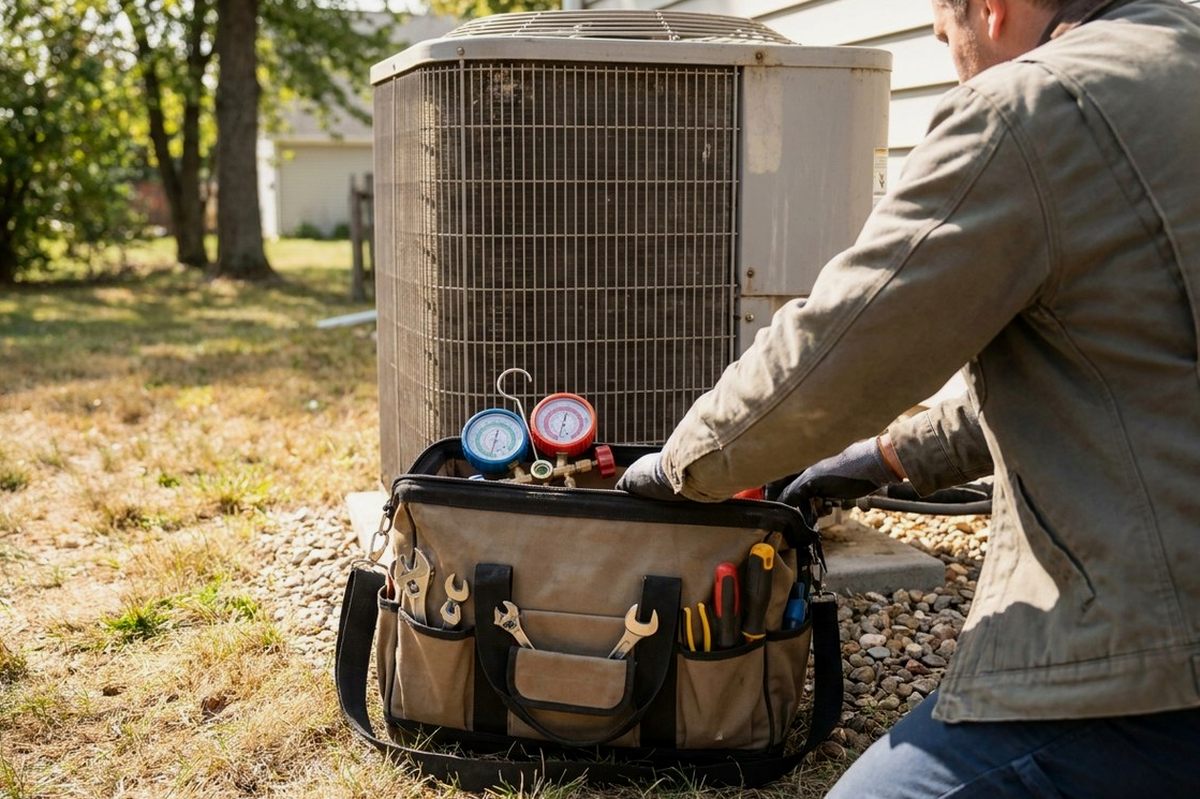
Derby City Comfort service team · field-reviewed before publishing
What Actually Decides It: Age, Fault Type, Parts and Fit
Four things drive the answer. Age matters because old flex duct gets brittle and the inner liner tears where you cannot see it, while sheet metal trunk lines often outlive the furnace attached to them. Fault type matters more: separated joints, crushed sections and disconnected boots are repairs, while liner collapse and rot along a whole run is not. Parts availability comes up on odd sizes and old rectangular fittings that have to be fabricated. Then there is fit. If your system was replaced and the new equipment moves more air than the old ductwork was sized for, sealing a too-small system just makes the pressure problem louder.
How We Look at It On the Visit
We start where you feel the problem. If one room is starving, we trace that branch from the supply plenum to the boot and look for the obvious first: a duct knocked loose in a crawlspace, a damper someone closed years ago, a return that was never finished. Then we look at the system as a whole. Static pressure readings, temperature at the register versus at the equipment, and the condition of the connections tell us whether we are chasing a handful of leaks or a system that was undersized from the start. We show you what we found before we quote anything, because the two paths are very different jobs.
When Sealing and Repair Is the Right Call
Most duct systems we see are worth saving. Solid metal trunk with leaky seams, dry joints where old tape has let go, a few disconnected boots under the floor, insulation that has fallen off in an unconditioned space. All of that is repair work. We reseal joints with mastic and proper tape, reconnect and support what has sagged, add insulation where the duct runs through hot or cold space, and correct dampers. If airflow to the far rooms improves and pressure across the system comes back into range, you have your answer. Repair also makes sense when the equipment is near the end of its life and you would rather stage the work.
Honest Cases Where Replacement Wins
Sometimes patching is throwing money at a bad layout. Flex duct with a shredded inner liner leaks air into the attic no matter how well you tape the ends. Duct board that has taken on water grows dirty and soft and cannot be cleaned back to good. Runs crushed under stored boxes or flattened by a remodel restrict air permanently. And if the trunk and branches were never sized for the equipment, or a previous crew ran one skinny return for a whole house, adding sealant does not add capacity. In those cases we redesign the affected section, or the whole system, and tell you plainly why.
What Happens After the Work
We recheck the same numbers we took at the start so you can see movement rather than take our word for it. Registers should deliver closer to even temperatures room to room, the system should reach setpoint and shut off instead of running long, and the far bedroom should stop being the problem room. Keep the filter on a schedule, leave supply and return vents open, and let us know if a room drifts again after a season. Ductwork rarely fails all at once. It gets pulled loose by someone working in a crawlspace or attic, and that is a small fix if you catch it early.
Sealing Ducts vs Replacing Them — what people ask
Can I just seal ducts from the inside myself?
We would not. The accessible joints are usually in crawlspaces and attics with sharp metal, wiring and insulation, and the leaks that matter are often hidden inside runs. Safe homeowner checks are filters, vents, thermostat settings and breakers.
Will sealing my ducts fix a room that has always been hot?
Sometimes. If that branch is leaking or disconnected, sealing solves it. If the run is undersized, too long or crushed, sealing will not add airflow. We measure the branch before promising anything.
Do I have to replace ductwork when I replace the furnace or AC?
Not always, but it needs checking. New equipment often moves more air than older ductwork was sized to carry, which causes noise and pressure problems. We evaluate the duct system as part of any replacement quote.
How it works
- Step 1
Tell us the symptom
Call or fill in the quote form. We ask what changed, when it started, and what the thermostat reads. That short conversation tells us whether you need a visit today or tomorrow morning.
- Step 2
We diagnose on site
A technician checks the thermostat, the electrical side, airflow through the filter and ducts, and the equipment itself. We find the actual cause instead of swapping parts and hoping the noise goes away.
- Step 3
You decide before we work
We explain what failed, what the repair involves, and what we would do if it were our own house. Nothing gets replaced until you say go. Then we test the system before leaving.
- A real person answers
- Open 7 days
- Written quote before work starts
Why homeowners call us
- Old houses and new onesWe are used to century-old homes with retrofitted ductwork and 1970s subdivisions with original returns. Tight crawl spaces, low basement headroom and odd attic runs are normal parts of the day for us, not surprises that stall the job.
- Built for the swingsHumid summers push AC systems hard and January freezes expose weak igniters and cracked flues. We repair for both extremes across the region, so the fix holds when the weather turns instead of failing the first hard week.
- Air conditioning and heating bothAir conditioner repair in July, heating repair in January, and the IAQ and airflow problems that hide in between. One crew that knows how your cooling and heating share the same blower and the same duct system.
- Plain talk, no pressureWe tell you when a repair makes sense and when replacement is the honest answer. No scare tactics about your BTU load, no upsell scripts. You get the condition of the system and a clear next step.
- All major brands, gas & electricEvery major HVAC brand, gas and electric, handled by an independent crew.
- Straight answersIf a system is not worth repairing, we say so, often right on the phone.
About this guide
Checked everything on the list and it still acts up?
Report what you saw during the checks and we handle the rest. A minute to book.
- A real person answers
- Open 7 days
- Written quotes
- All major brands
- Gas & electric
Rather not call? Get a free quote →