
The independent heating and cooling company across Kentucky and the Ohio Valley
What to Check Before the Heat Goes On for the Season
You flip the thermostat to heat for the first time in October, smell a little dust burning off, and wonder if that is normal or the start of a problem. This guide walks through the checks worth doing before the cold sets in, the failures we see most in fall, and when to call us for heating repair instead of waiting it out.
Call (888) 414-3292- A real person answers
- Open 7 days
- Written quote before work starts
Taking calls until 5:00 PM ET
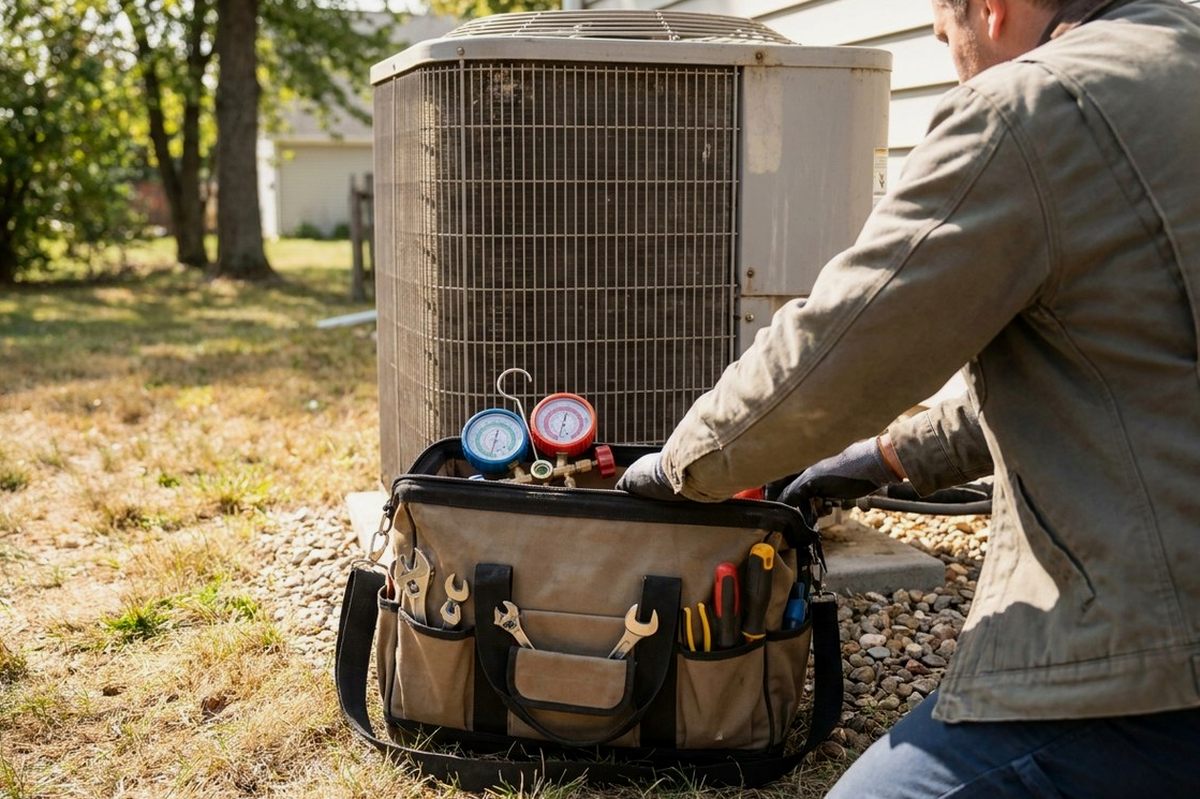
Derby City Comfort service team · field-reviewed before publishing
How Fall and Winter Stress a Heating System
Across our service area, a furnace sits idle all summer while humidity works on the metal and dust settles into the blower. Then one cold night it runs for hours straight. That jump from zero to full duty is where weak parts give up. Older homes in Illinois, Indiana, Kentucky, Ohio, Tennessee and West Virginia often have basement furnaces with long duct runs, so the system works harder to push heat to back bedrooms. Add a January freeze on top of a mild December and you get a system that never got eased into the season. We see the results in the first hard cold snap every year.
Which Failures Spike and When
Early fall calls are mostly ignition problems. A hot surface igniter that cracked over the summer will light fine in September and fail at 15 degrees. Flame sensors coated in residue cause the burner to light and shut down after a few seconds, over and over. Mid-winter we get more blower motor and capacitor failures, since those parts have been running nearly nonstop. Frozen or blocked condensate lines show up in high efficiency furnaces during long cold stretches. And late winter brings heat exchanger concerns on older units. If your furnace short cycles or the flame looks yellow and lazy, call us for furnace repair before it gets colder.
Safe Checks You Can Do Yourself
Start with the thermostat. Fresh batteries and the right mode setting solve more no-heat calls than people expect. Check the breaker for the furnace and the switch near the unit, since either can get flipped during other work. Change the filter. A clogged filter starves airflow, overheats the exchanger and trips the limit switch, which reads as a furnace that quits after ten minutes. Walk the house and confirm supply and return vents are open and not blocked by furniture or rugs. If you have a heat pump, clear leaves and debris away from the outdoor unit. Stop there. Anything involving gas, refrigerant or high voltage is our work, not yours.
Gas Smell and Carbon Monoxide Come First
If you smell gas, leave the building immediately. Do not flip switches or use your phone inside. Once you are outside and away, call 911 or your gas utility, then call us. Same order if a carbon monoxide alarm sounds: everyone out, emergency services first, us second. Get working CO alarms on every level before the heating season starts, especially in homes with a basement furnace or an attached garage. Signs worth taking seriously include headaches or nausea that improve when you leave the house, soot around the furnace, or a burner flame that is yellow instead of blue. We inspect combustion and venting as part of heating repair.
What a Pre-Season Visit Actually Covers
When we come out before the cold, we test ignition and the flame sensor, check gas pressure and burner operation, inspect the heat exchanger, measure blower amp draw, verify the safety switches and limits, and clear the condensate drain on high efficiency units. We also check static pressure to see whether ductwork is choking airflow, which matters in older homes with undersized returns. If you have a heat pump, we check refrigerant charge, reversing valve operation and the defrost cycle. The point is finding the part that is about to fail while you still have heat, instead of at midnight in January. Call us to get on the schedule while the weather is still mild.
What to Check Before the Heat Goes On for the Season — what people ask
Why does my furnace smell like burning dust the first time it runs?
Dust settled on the heat exchanger during the off season and burns off in the first cycles. It should fade within an hour. If the smell is sharp, chemical or lingers for days, shut the system down and call us.
When should I book a pre-season heating check?
Early fall, before the first real cold snap. Booking in September or October means parts are available and you are not waiting behind a queue of no-heat calls during a freeze.
My furnace starts then shuts off after a minute. What is wrong?
That pattern usually points to a dirty flame sensor, a failing igniter or restricted airflow from a clogged filter. Change the filter first. If it still short cycles, call us for furnace repair.
How it works
- Step 1
Tell us the symptom
Call or fill in the quote form. We ask what changed, when it started, and what the thermostat reads. That short conversation tells us whether you need a visit today or tomorrow morning.
- Step 2
We diagnose on site
A technician checks the thermostat, the electrical side, airflow through the filter and ducts, and the equipment itself. We find the actual cause instead of swapping parts and hoping the noise goes away.
- Step 3
You decide before we work
We explain what failed, what the repair involves, and what we would do if it were our own house. Nothing gets replaced until you say go. Then we test the system before leaving.
- A real person answers
- Open 7 days
- Written quote before work starts
Why homeowners call us
- Old houses and new onesWe are used to century-old homes with retrofitted ductwork and 1970s subdivisions with original returns. Tight crawl spaces, low basement headroom and odd attic runs are normal parts of the day for us, not surprises that stall the job.
- Built for the swingsHumid summers push AC systems hard and January freezes expose weak igniters and cracked flues. We repair for both extremes across the region, so the fix holds when the weather turns instead of failing the first hard week.
- Air conditioning and heating bothAir conditioner repair in July, heating repair in January, and the IAQ and airflow problems that hide in between. One crew that knows how your cooling and heating share the same blower and the same duct system.
- Plain talk, no pressureWe tell you when a repair makes sense and when replacement is the honest answer. No scare tactics about your BTU load, no upsell scripts. You get the condition of the system and a clear next step.
- All major brands, gas & electricEvery major HVAC brand, gas and electric, handled by an independent crew.
- Straight answersIf a system is not worth repairing, we say so, often right on the phone.
About this guide
Past the safe checks, it's a job for tools and a meter
Tell us what you tried and what it did. The booking itself takes a minute.
- A real person answers
- Open 7 days
- Written quotes
- All major brands
- Gas & electric
Rather not call? Get a free quote →